Montecucco Wine Area
Montecucco Wine Area
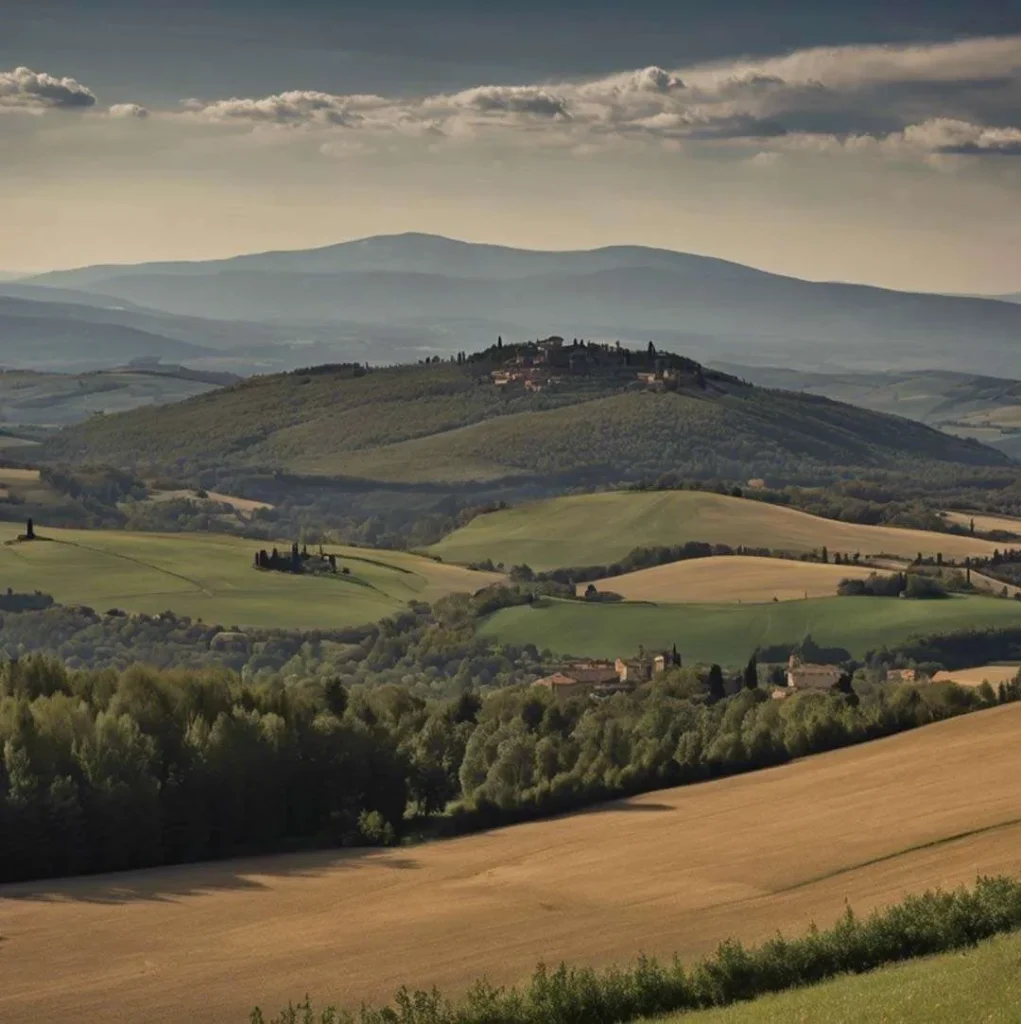
In the heart of Tuscany, the Montecucco district stands out for its extraordinary scenic beauty and a remarkable winemaking heritage, encompassing seven municipalities.
The landscape is a charming alternation of gentle hills and fertile valleys, where the typically Mediterranean climate and the deep commitment of its inhabitants have fostered the production of excellent wines.
In this southern part of Tuscany, within the province of Grosseto, Montecucco DOC and Montecucco Sangiovese DOCG reach the pinnacle of their expression.
Cinigiano emerges as the vital hub of this prestigious wine area, representing the true heart of Montecucco.
Here, the diverse landscape of hills and forests hosts the Sangiovese grape in optimal conditions, thanks to a favorable microclimate and soils ranging from clayey to gravelly, endowing the wines with rich complexity and intensity.
Montecucco’s climate, influenced by its proximity to Monte Amiata and its geological configuration, offers unique conditions.
Most of the denomination’s area consists of hilly terrain, with vineyards primarily dedicated to cultivating Sangiovese.
In this context, the grape achieves an ideal productive balance, allowing for the development of moderately sized clusters and a higher accumulation of noble compounds in the berries.
The significant temperature variation during the ripening period, greater than in lowland areas, further enriches the wines’ aromatic profile, giving them a distinctive complexity compared to those produced at lower altitudes.
The sloping terrain and careful selection of vineyard exposure ensure, despite the altitude, excellent grape ripening in terms of both sugar concentration and phenolic richness.
This characteristic makes the wines particularly suitable for aging, especially when produced through extended maceration periods.
Within this favorable geographical and climatic context, Montecucco establishes itself as a leading wine-producing area, where tradition and nature harmoniously blend to create wines that are not only an expression of their land but also a testament to the passion and dedication of those who produce them.
The Municipalities of Montecucco Wine
- Cinigiano: The heart of the Montecucco area, Cinigiano is set in a hilly landscape that favors the cultivation of native grape varieties.
Wines from this municipality are known for their balance, body, and character, reflecting the land from which they originate.
Beyond its importance in the wine sector, Cinigiano is renowned for its traditional festivities, such as the “Grape Festival,” featuring various activities celebrating local culture and traditions, including tastings of traditional dishes, musical performances ranging from medieval drummers to modern bands and DJs, and historic parades.
Two other historic festivals in Cinigiano are the “Sagra del Capitone” in Sasso d’Ombrone and the “Chestnut Festival” in Monticello Amiata.
The Sagra del Capitone in Sasso d’Ombrone celebrates the local delicacy, the capitone eel, historically fished from the Ombrone River flowing below the village.
This festival stands out for its culinary specialties, especially the “Capitone alla Barbarossa” (grilled eel, which reduces its fat content) and stewed eel, alongside “pici alla chitarra” pasta and grilled meat.
All dishes are paired with Montecucco wine.
The event is not only an opportunity to taste delicious local dishes but also offers an immersion into the town’s culture and life through cultural initiatives, traditions, and dance evenings with live music.
The Sagra del Capitone usually takes place in September, with specific dates varying each year.
This event provides a rich and immersive experience in the local heritage, promoting viticulture and regional products. For more details, visit their website.
- Civitella Paganico: With its varied lands and rolling hills, Civitella Paganico produces wines of great structure.
The municipality is also famous for the “Sagra della Granocchia” (Frog Festival), an annual event held between late August and early September, making it one of the most unique festivals in the Maremma region, set in the medieval village of Paganico.
The highlight of the festival is the Frog Race Palio, where competitors from the different town districts push a wheelbarrow carrying three frogs, trying not to lose them along the way.
The festival also includes culinary competitions between neighborhoods featuring frog-based dishes, a historical parade with dozens of participants in period costumes, and evenings enlivened by live musical performances.
- Castel del Piano: The vineyards of Castel del Piano, nestled at the foot of Monte Amiata, give the local wines a unique freshness and minerality.
History and art intertwine with viticulture here, enriching the cultural heritage of wine.
Famous for the impressive Palazzo Nerucci, a Renaissance building, Castel del Piano also hosts cultural events such as concerts and art exhibitions that bring the historic center to life.
Castel del Piano is home to the famous “Palio di Castel del Piano,” held every September 8, a historical event dating back to the early 1400s, linked to a legend about the miracle of the Madonna delle Grazie.
The race features four districts—Borgo, Monumento, Poggio, and Storte—competing in a bareback horse race, with each district representing a historic part of the town, distinguished by unique colors and symbols.
The event culminates in Garibaldi Square, a shell-shaped arena inspired by Siena’s Piazza del Campo, where the race takes place.
This deeply rooted tradition offers spectacular historical parades, horse assignments, and jockey trials, creating a festive atmosphere that engages both residents and visitors.
- Campagnatico: Divided between the Montecucco and Morellino wine regions, Campagnatico enjoys a unique position that translates into wines with a distinctive character, showcasing a wide aromatic range influenced by two different terroirs.
Campagnatico hosts the annual “Palio dei Ciuchi,” a captivating event held on the second Sunday of September, bringing the community together for a celebration rich in tradition and spectacle.
The competition involves the town’s four districts—Pieve, Centro, Castello, and Santa Maria—competing in a donkey race through Campagnatico’s main streets, which are covered in sand for the occasion.
Originally modernized in 1957, the event has deep historical roots in Campagnatico, offering an emotional rollercoaster for participants and spectators alike.
The Palio begins with the presentation of the “Cencio,” a hand-painted banner, followed by a solemn procession and flag-waving performances, reflecting the spirit of camaraderie and rivalry typical of Tuscan culture.
- Arcidosso: The proximity to Monte Amiata and the presence of forests and waterways make the wines of Arcidosso particularly appreciated for their vibrancy and purity, striking a perfect balance between body and acidity.
Beyond its natural beauty, Arcidosso boasts a significant cultural heritage, including the Aldobrandeschi Castle and the David Lazzaretti Study Center, dedicated to the local prophet and his utopian visions.
- Roccalbegna: Vineyards on rocky terrain and the mild climate of Roccalbegna produce robust, intense wines distinguished by their persistence and complex, inviting bouquet.
Characterized by a picturesque medieval village, Roccalbegna is known for its imposing fortress and charming bridges crossing the Albegna River, offering scenic views perfect for photography enthusiasts.
Here stands the Rocca di Roccalbegna, also known as the Aldobrandesca Fortress, which dominates the town and the Albegna River from above, serving as a strategic defense point since the Middle Ages.
Used by the Aldobrandeschi family for defensive and surveillance purposes, its impregnable position also functioned as a refuge for the population during sieges.
Although it lost its strategic importance in the 14th century under Sienese rule, its majestic ruins remain a testament to its grand history, offering a fascinating glimpse into Tuscany’s medieval past.
In Roccalbegna, you can taste the Biscotto Salato di Roccalbegna, a Slow Food Presidium.
- Seggiano: Famous for its olive oil, Seggiano contributes to the Montecucco area with wines that stand out for their elegance and finesse, often accompanied by a finish reminiscent of the rich oiliness of olives.
Besides its PDO olive oil, Seggiano is famous for the Daniel Spoerri Garden, an artistic park where sculptures and installations blend with the natural landscape, creating an open-air contemporary art museum.
Tourist Attractions
At the summit of Monte Amiata, there is a well-equipped tourist complex where visitors can enjoy not only breathtaking views but also convenient facilities.
The large parking area allows easy access to numerous restaurants, lodges, and refreshment points that offer the delights of local cuisine, providing an opportunity to savor typical products in a unique setting.
From here, several well-marked trails and paths of varying difficulty levels start, allowing visitors to explore the natural and scenic beauty of Monte Amiata in every season.
In the Montecucco area, you can also find the top-rated tourist attraction in the region for 2023, according to a report by the Centro Studi Turistici di Firenze and the University of Venice, commissioned by the Tuscany Region.
We are talking about Albus Alpacas, an alpaca farm that welcomes thousands of visitors each year for interactive guided tours, alpaca walks, and alpaca trekking experiences.
During the winter months, Monte Amiata transforms into a prime destination for winter sports enthusiasts.
Its slopes become the perfect setting for days on the ski runs, with lifts serving various trails suitable for both beginners and experienced skiers.
The snow, which regularly covers the mountain in winter, offers the unique opportunity to enjoy skiing, snowboarding, and snowshoeing in a truly unusual Tuscan landscape.
History and Culture
The history of Monte Amiata is deeply intertwined with the people who have inhabited it for centuries.
Since ancient times, the mountain has been a key reference point for Etruscan and Roman communities, as evidenced by the numerous archaeological sites scattered throughout its valleys.
During the Middle Ages, Monte Amiata became an important monastic center, with the foundation of abbeys and hermitages that still serve as sites of great historical and spiritual interest today.
The mountain also played a crucial role in the region’s economy, particularly through mercury mining, which was one of the main activities until the mid-20th century.
This mining past is now commemorated in museums and thematic trails that allow visitors to discover a lesser-known but essential aspect of the local history.
Other Attractions
Beyond nature excursions and winter sports, Monte Amiata offers numerous other attractions.
The thermal waters that flow at its base supply renowned spa resorts such as Saturnia, Bagni San Filippo, and Bagno Vignoni, where relaxation meets physical well-being.
The communities living on the slopes of Amiata preserve centuries-old traditions, celebrating festivals and fairs that offer visitors the chance to immerse themselves in the local culture.
Among these, the Autumn Festival of Amiata and the Chestnut Festival of Arcidosso are events that celebrate local products, from chestnuts to porcini mushrooms, in a feast of flavors and conviviality.
Monte Amiata is not just a tourist destination but a world of its own, a place where nature and history…